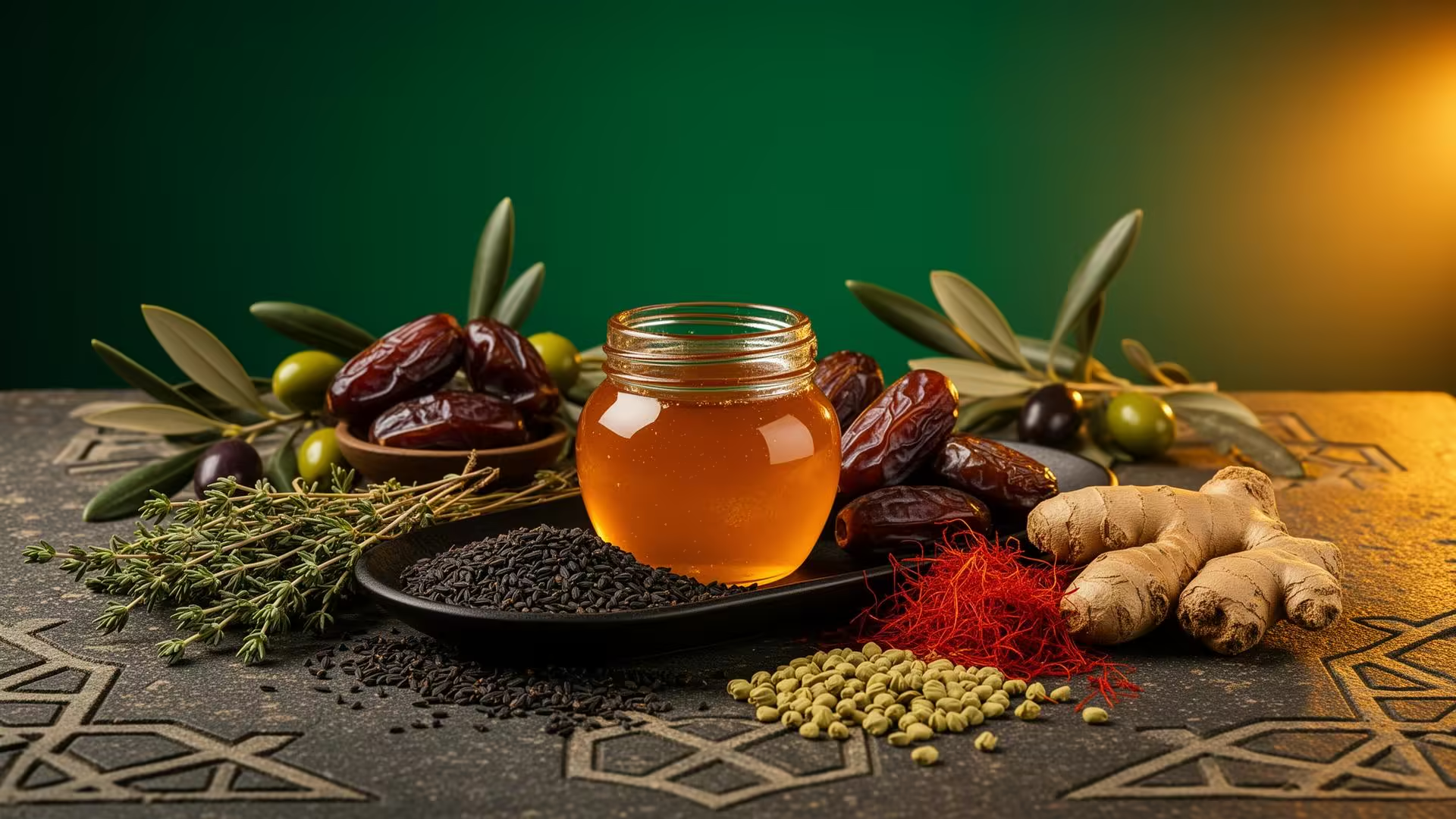
Islamic Remedies
Healing from Quran & Sunnah
Islamic Remedies
Healing from Quran & Sunnah
Quran · Sunnah · Prophetic Medicine
Islamic
Remedies — Authentic Prophetic Medicine & Sunnah Healing
Explore authenticated healing traditions from the Quran & Sunnah — from black seed and honey to olive oil and cupping (hijama).
0+
Remedies
4
Categories
1400+
Years of Wisdom
100%
Authenticated
Verified Sources
Scholarly References
Educational Purpose
0+ remedies
4 categories
Authenticated sources
Showing 0 remedies
0 remedies
Popular searches
Sleep Dua
Prophet Muhammad ﷺ • Sahih al-Bukhari 6314 • Hadith Supplication • Sahih
Educational only - Not medical advice. Consult healthcare professionals.
Hadith Supplication
Sleep Dua
SahihProphet Muhammad ﷺ•Sahih al-Bukhari 6314
📷 Photo on Unsplash
Source Information
Primary Source
Prophet Muhammad ﷺ
Reference
Sahih al-Bukhari 6314
النص العربي
بِاسْمِكَ اللَّهُمَّ أَمُوتُ وَأَحْيَا
الحديث الكامل بالسند
حَدَّثَنَا مُحَمَّدُ بْنُ الْعَلاَءِ حَدَّثَنَا أَبُو أُسَامَةَ عَنْ بُرَيْدٍ عَنْ أَبِي بُرْدَةَ عَنْ أَبِي مُوسَى عَنِ النَّبِيِّ أَنَّهُ كَانَ إِذَا أَخَذَ مَضْجَعَهُ قَالَ اللَّهُمَّ بِاسْمِكَ أَمُوتُ وَأَحْيَا
Sahih al-Bukhari 6314
Translation
"In Your Name O Allah I die and live"
Complete Narration
"
Narrated Abu Musa: When the Prophet went to bed he would say O Allah in Your Name I die and live
Source: Sahih al-Bukhari 6314
Remedy Details & Usage
Concise bedtime dua recognizing sleep as minor death. Invoking Allah's name for protection. Maintains awareness of death reality.
About Sleep Dua in the Sunnah
Sleep Dua is a supplication (du'a) preserved in the hadith literature, taught by the Prophet Muhammad ﷺ to be said at the moment of difficulty, illness or distress.
In this collection, Sleep Dua is associated with sleep and life death. It is applied through recitation: read it attentively, ideally repeating it and, where appropriate, blowing lightly over the affected area or over water.
This entry is recorded in Prophet Muhammad ﷺ (Sahih al-Bukhari 6314). The narration is graded Sahih. The wording above is reproduced from that source so you can verify it directly, and it is offered for learning and spiritual benefit — not as a substitute for medical diagnosis or treatment.
Consult Healthcare Professional
While these remedies are from authentic Islamic sources, always seek qualified medical advice for health conditions, especially serious or persistent symptoms. This information is for educational purposes only and should not replace professional medical care.
Image: Photo on Unsplash • Free License (CC BY-SA)
You Might Also Find Helpful
Save to favorites
Share this remedy